
The Most Common Makeup Mistakes Made on Asian Clients, According to 500+ Asian People
Months ago, I posted a TikTok asking Asian people, "If you've had your makeup professionally done by someone who wasn't familiar with Asian facial features, what did they do incorrectly?"
I received almost 600 comments, and people are still commenting to this day. I decided to consolidate the most common responses so you know what to look out for the next time you get your makeup professionally done. Hopefully, it's by me if you're looking for an Asian makeup artist in the DC, Maryland, or Virginia area.
More importantly, I want to highlight why AANHPI representation in the beauty industry matters. Whether you're looking for a DMV makeup artist, an Asian bridal makeup artist, or simply someone who understands Asian facial features, representation and education make a huge difference.
Eye Makeup in General
Unsurprisingly, eye makeup was the most common complaint. Many of the comments came from East Asian women.
While there are now more makeup education resources available that teach artists how to work with East Asian features, especially East Asian eyes, I'm not convinced every artist is taking the time to learn. Many still assume it's the same as working with Western features.
Longevity Issues
One of the biggest concerns is longevity. I'm speaking primarily from my experience as someone with East Asian features.
I've found that very few makeup products sold in the United States are designed with East Asian eye anatomy in mind, particularly mascara and eyeliner. Many East Asian people have more fullness around the eye area, which means that when we smile or make facial expressions, the upper lid can touch the lower lid. While makeup may be waterproof, it is not oil-proof. Natural oils continue to break down products throughout the day, causing smudging and transfer.
Some people also have epicanthic folds, which can make it even more difficult for makeup to stay in place.
Thankfully, Korea and Japan have mastered eyeliners and mascaras that truly resist smudging and transfer. During makeup lessons with my Asian clients, I'm constantly introducing them to these products because they're still not widely known in the U.S.
Eyeshadow Placement and Color Choices
Another common issue is eyeshadow placement.
For East Asian clients, I often see artists using techniques that feel stuck in 2016: placing a transition shade in the crease, deepening the outer corner into the crease, and topping the lid with a bright shimmer. I also frequently see concealer applied heavily across the eyelid as an eyeshadow primer.
In flash photography, this can create noticeable flashback and make the eye area appear flat.
Instead, I like to begin with a mid-tone shade that's slightly deeper than my client's skin tone and apply it across the entire lid. Depending on the client's eye shape, I bring the color above the eyelid fold so it remains visible when the eyes are open. For clients with monolids, I typically bring the color about halfway toward the brows.
People with monolids often have more visible lid space, but bringing color all the way to the brow bone can distract from their natural eye shape and appear overly dramatic. Just because the space exists doesn't mean it all needs to be filled.
To add depth, I concentrate darker shadows along the outer lash line and outer corner. I then place shimmer primarily in the center of the lid above the pupil. I avoid bringing the shimmer higher than the initial shadow because I want the depth from the first shade to remain visible.
By applying eyeshadow this way, I'm not emphasizing the natural lack of depth often found in East Asian facial features. Instead, I'm creating dimension through strategic color placement.
Eyeliner Placement
Traditionally, many makeup artists are taught to draw eyeliner wings in an upward direction to create a lifted effect. However, this approach is not always the most flattering on Asian eyes.
I customize eyeliner placement based on my client's eye shape, personal preferences, and smile lines. By following the natural direction of the eye, the liner feels like an enhancement rather than a harsh line cutting across the face.
Filling in Eyebrows
I was initially surprised by how often eyebrows came up because brows have always felt relatively straightforward to me. However, after seeing photos from commenters, I quickly understood the issue.
Many artists seem to be heavy-handed with brow pencils. Since Asian eyebrow hair is often naturally dark, I usually take a "less is more" approach.
That said, communication is incredibly important because eyebrows can completely change a look. Some of my South Asian clients prefer a fuller, more defined brow, while others simply want a bit of brow gel. Preferences vary significantly from person to person.
Another common mistake is choosing brow products that are too warm. Asian eyebrow hairs often have cooler undertones, while many Western brow products lean warm, creating an unnatural result.
Blush Placement
East Asian faces often have flatter facial planes, meaning we may not have prominent brow bones, high nasal bridges, or strongly projected cheekbones.
Because of this, blush placement requires a different approach.
While blush placement always depends on a client's preferences and facial structure, I generally concentrate blush higher on the face, sometimes slightly under the eyes, and blend it upward along the top of the cheekbone. I prefer keeping blush above the nose line to avoid creating heaviness or dragging the face downward.
Foundation Matching
Last but certainly not least: foundation matching.
Many Asian skin tones are actually neutral with olive overtones. One easy way to identify this is when a warm foundation pulls overly peachy or orange. Adding a small amount of green color corrector often neutralizes the warmth immediately.
One of the biggest misconceptions in makeup is that Asian people primarily have yellow undertones. In my experience, neutral and olive undertones are extremely common, especially among light to medium skin tones.
For deeper Asian complexions, foundation matching often requires multiple shades. I frequently use a deeper shade around the perimeter of the face and a lighter shade toward the center.
It's also important to pay close attention to the arms and chest. Many South Asian clients experience hyperpigmentation, and choosing the correct color corrector is essential to prevent the skin from appearing gray or ashy.
Foundation matching is incredibly nuanced, which is why it's one of the most requested topics during my makeup lessons.
Final Thoughts
I want to acknowledge that I've made many of these mistakes myself. When I first started my makeup career, I was applying the techniques that were popular and being taught at the time. Looking back at my own makeup from 2016-2017, I can see so many things I would do differently today.
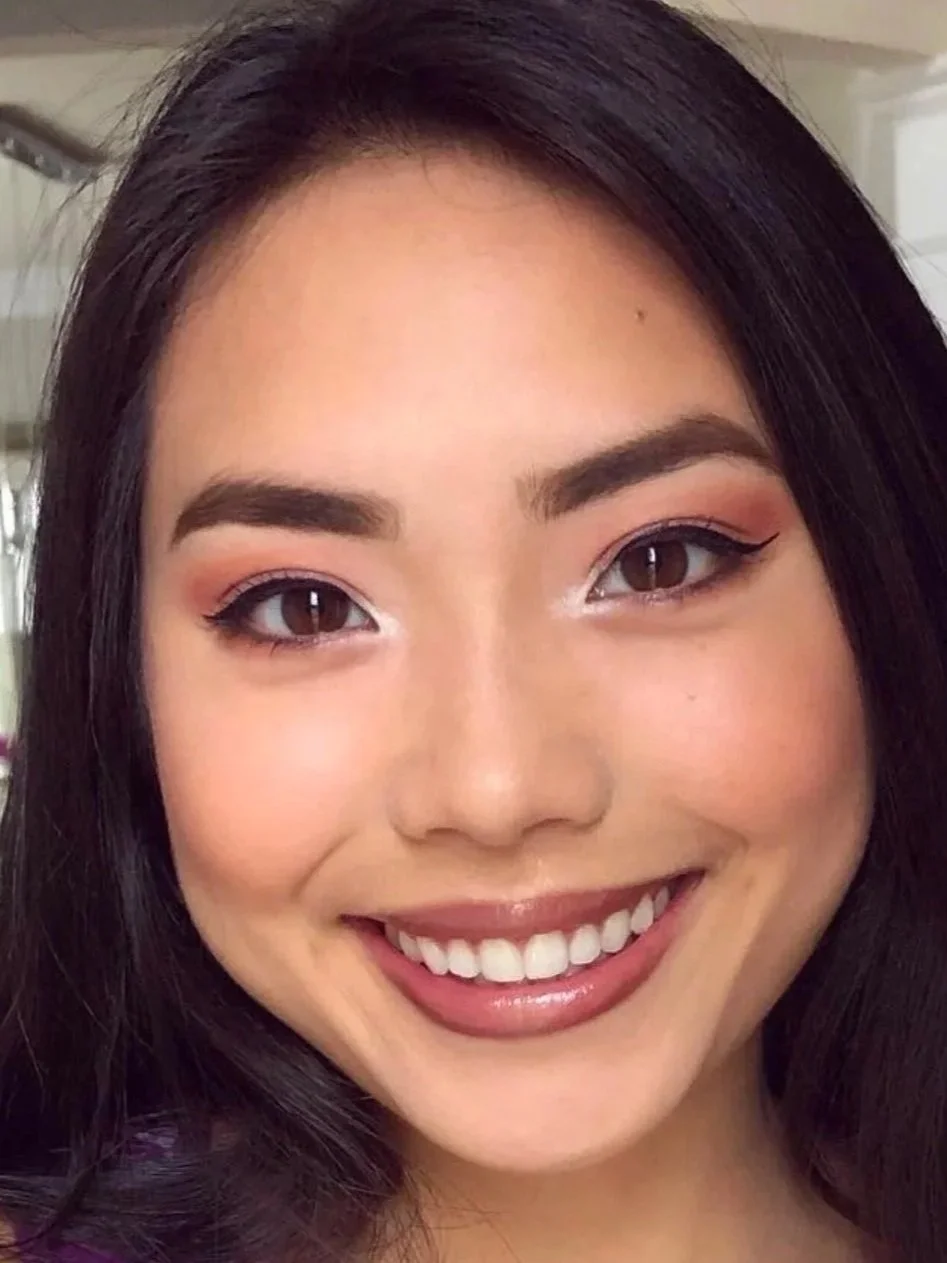
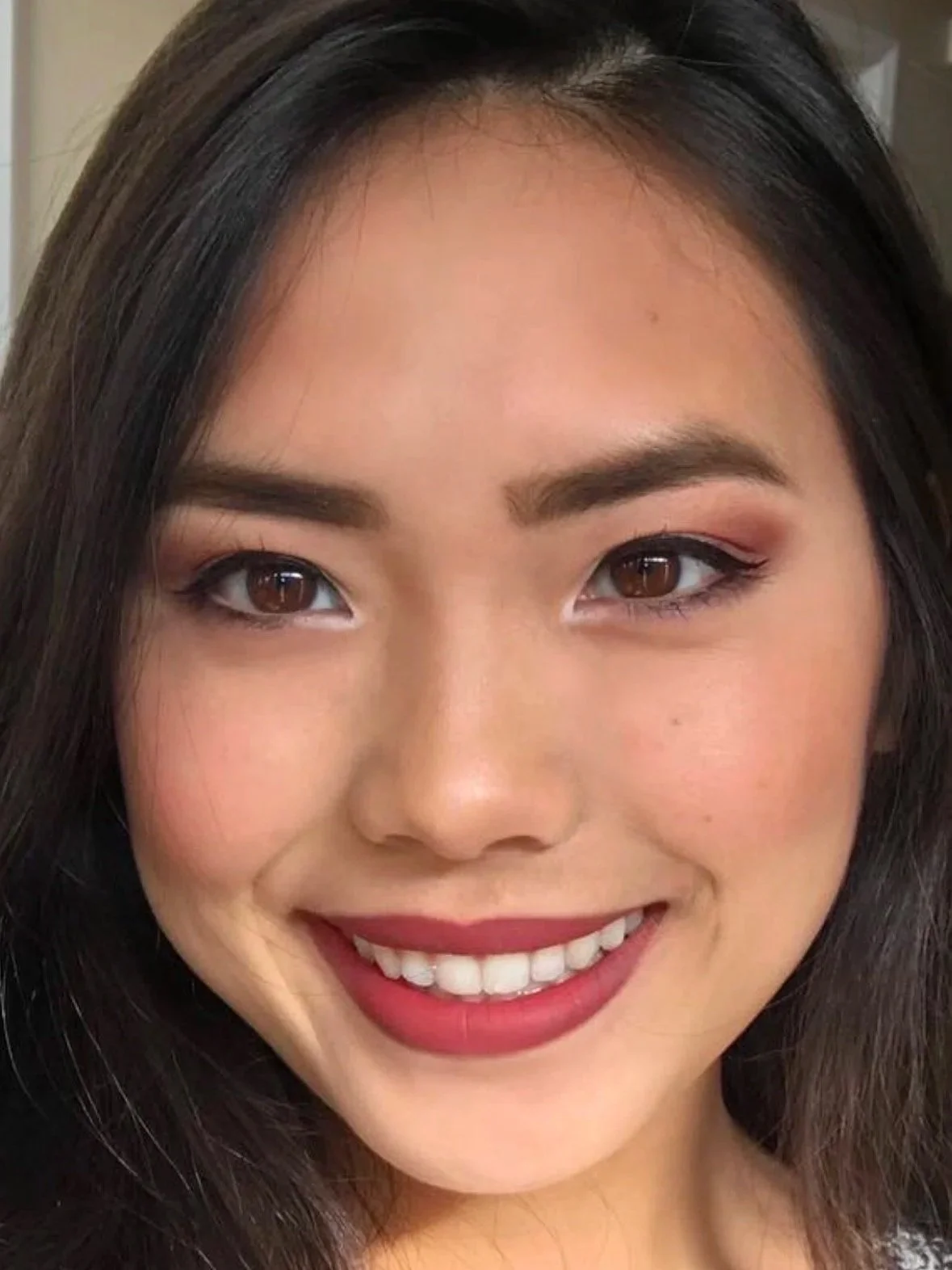
I share this not to criticize other artists, but to show that growth comes from education and experience. The beauty industry has become much more inclusive over the years, and I'm grateful to continually learn how to better serve my diverse clientele.
I could go on for hours about the nuances of adapting makeup techniques to the diverse features within the Asian community. However, my goal is simply to spread awareness about some of the most common makeup mistakes Asian clients experience.
Whether you're a makeup artist, someone learning makeup for yourself, or a client who's felt frustrated after a professional makeup appointment, I hope this helps educate, inform, and validate those experiences.
And if you're searching for a DMV Asian makeup artist who understands Asian features, representation matters. Makeup should enhance your natural features, not force them into a one-size-fits-all beauty standard.
